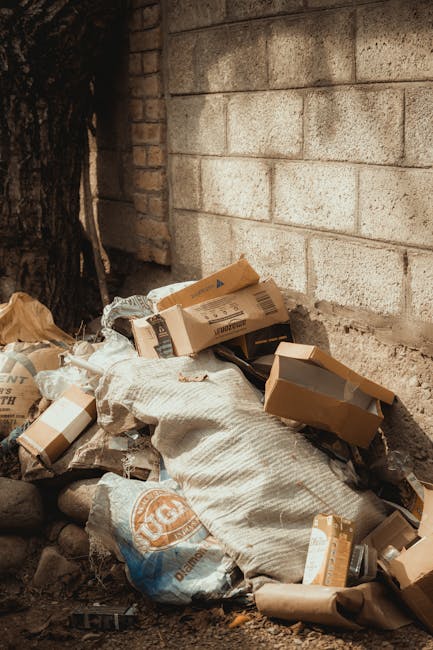
HA1 household rubbish clearance guide for Harrow
If you live in HA1 and the rubbish is starting to take over a spare room, hallway, loft, or garden corner, you are not alone. Household rubbish clearance can creep up slowly: a broken chair here, an old mattress there, a few bags after a clear-out, and suddenly the job feels bigger than a Saturday morning. This HA1 household rubbish clearance guide for Harrow breaks the process down in plain English, so you can handle it properly, avoid common mistakes, and choose the right clearance option for your home.
Whether you are clearing after a move, dealing with worn-out furniture, sorting a garage, or simply trying to get your house back in order, the key is to know what should happen, what to watch out for, and when it makes sense to bring in help. Let's get into it.
Contents
- Why HA1 household rubbish clearance guide for Harrow Matters
- How HA1 household rubbish clearance guide for Harrow Works
- Key Benefits and Practical Advantages
- Who This Is For and When It Makes Sense
- Step-by-Step Guidance
- Expert Tips for Better Results
- Common Mistakes to Avoid
- Tools, Resources and Recommendations
- Law, Compliance, Standards, or Best Practice
- Options, Methods, or Comparison Table
- Case Study or Real-World Example
- Practical Checklist
- Conclusion
- Frequently Asked Questions
Why HA1 household rubbish clearance guide for Harrow Matters
Household rubbish is not just "stuff you will deal with later". In a busy home, clutter affects how rooms work, how safe they feel, and how quickly small problems become bigger ones. A stack of bags in the corner can block access, a bulky item can create a trip hazard, and damp cardboard left too long can start smelling a bit sour. Not ideal, frankly.
In Harrow, as in most parts of London, space is valuable. HA1 homes can be compact, shared, family-sized, or a mix of flats and terraced houses, and rubbish clearance needs to fit around real life: neighbours, parking, stairs, limited storage, and tight time windows. That is why a clear process matters. You want waste removed cleanly, legally, and without turning one problem into three more.
It also matters because household waste is not all the same. General rubbish, old furniture, broken appliances, bagged junk, and mixed items each need a slightly different approach. Some things can be reused, some recycled, and some need more careful handling. Getting that judgement right saves time and helps keep disposal sensible.
If your clearance is part of a wider home reset, it may also connect naturally with services such as home clearance or house clearance, especially when more than one room is involved. That broader approach is often the calmer one. Less back-and-forth. Less mess left behind.
Expert summary: Good household rubbish clearance is about more than lifting bags. It is about sorting, separating, safety, access, and making sure the waste ends up in the right place, not just out of sight.
How HA1 household rubbish clearance guide for Harrow Works
At its simplest, household rubbish clearance follows a straightforward path: identify what needs removing, separate anything useful or recyclable, arrange collection or disposal, and make sure the load is handled responsibly. The detail sits in the middle. That is where most people either save time or make avoidable mess.
A typical household clearance in HA1 begins with a walk-through of the property. You look at what is being removed, whether there are stairs or narrow access points, whether items are heavy or fragile, and whether the job is a single load or a more substantial clear-out. A garage stuffed with old boxes is one thing. A full loft, with dust, awkward angles and bulky items, is another entirely.
From there, the waste is usually split into practical groups:
- General household rubbish such as bags, packaging, broken household odds and ends, and unwanted clutter.
- Reusable items that might be kept, sold, donated, or passed on.
- Bulky items like sofas, wardrobes, tables, and beds.
- Special waste that needs extra care, such as paint, certain electrical items, or sharp materials.
Once sorted, the actual removal can be done in stages or all in one go. For many homes, a single scheduled clearance is the easiest route. For others, especially after decorating, bereavement, or a long period of accumulation, a phased approach works better. There is no prize for doing it the hard way.
If furniture is part of the load, you may also find the topic overlaps with furniture clearance and furniture disposal. That becomes useful when the bulk of the waste is made up of sofas, beds, cabinets, or dining sets rather than loose household rubbish.
Key Benefits and Practical Advantages
The obvious benefit is getting your space back. That said, the real value is usually bigger than a clear floor. A proper household rubbish clearance can make a home easier to clean, safer to move around, and less mentally tiring. Clutter has a way of quietly draining energy. You notice it most when it is finally gone.
Here are the main advantages people tend to appreciate most:
- More usable space: rooms feel larger and function better when unnecessary items are removed.
- Less stress: once the mess is gone, the job stops hovering in the background of your day.
- Safer access: fewer trip hazards, less blocking of corridors, and less lifting around awkward piles.
- Better sorting: reusable and recyclable items are easier to separate when you plan the clearance properly.
- Cleaner finish: a tidy clearance leaves the home in a much better state for cleaning, decorating, or moving.
- Time saved: one organised removal is usually faster than several trips in a car or van.
There is also a practical advantage in using a service structure that already understands waste categories, loading, and responsible disposal. If the job is mixed and awkward, a specialist waste removal approach is often more efficient than trying to improvise. For broader loads, waste removal can be a helpful starting point.
And to be fair, there is something satisfying about seeing a pile reduce to a clean corner. A small win, but a real one.
Who This Is For and When It Makes Sense
This guide is useful for homeowners, tenants, landlords, families, and anyone trying to clear a property in HA1 without turning the day into a slog. It also helps if you are dealing with a room you have been avoiding for months. You know the one. The spare room that became a storage room, then a bit of a mystery zone.
It makes particular sense in situations like these:
- After a house move, when you want to leave or settle into a place cleanly.
- Following a declutter, renovation, or redecorating project.
- After years of things building up in a loft, garage, or shed.
- When an elderly relative's home needs clearing with care and patience.
- When a tenancy ends and the property needs to be made presentable again.
- When bulky household rubbish is too much for normal bin collection.
If you live in a flat, access and timing can matter even more, especially if you have stairs, lifts, or shared entrances. In those cases, flat clearance is often a more suitable fit than a general one-size-fits-all approach.
Some homes also have a lot of storage built up in garages or lofts. If that is your pain point, the job may be less about rubbish and more about untangling years of "keep it just in case". That happens. All the time.
Step-by-Step Guidance
If you want the job to run smoothly, follow a simple sequence. This is the part where a little planning saves a lot of back strain.
- Walk through the property properly. List what needs to go, room by room. Do not rely on memory alone. People always forget the awkward little pile behind the door.
- Separate useful items first. Set aside anything to keep, donate, sell, or pass to family. Once a bag is mixed with waste, people tend to stop thinking clearly about it.
- Identify bulky or awkward items. Sofas, mattresses, wardrobes, broken shelving, and dismantled furniture should be noted early.
- Watch for special items. Electricals, sharp materials, liquids, and anything potentially hazardous should be flagged before collection.
- Check access. Measure stairways, note parking restrictions, and think about where items will be carried from and to. A clear path makes everything easier.
- Decide the clearance method. Small jobs can sometimes be handled through self-tip or a few car loads, while larger jobs are often better managed by a professional clearance service.
- Choose a sensible collection time. Mornings can be calmer, especially if the street gets busy later or parking becomes tighter.
- Prepare the items for removal. Bag loose rubbish, empty drawers, tape up unstable boxes, and keep pathways clear.
- Do a final check. Open cupboards, look behind doors, and check the loft hatch or garage shelves before the team leaves.
It sounds basic, but this is where jobs succeed or fall apart. Skipping the prep usually means wasted time on the day. And nobody wants that.
If you already know the clearance will include outdoor waste too, it may be worth looking at garage clearance or garden clearance as part of the wider plan. Household rubbish often spreads into these areas, like it has a mind of its own.
Expert Tips for Better Results
A few small decisions can make a big difference. In our experience, the smoothest clearances are the ones where the homeowner has already done the annoying thinking before anyone starts lifting.
- Sort by destination, not just by room. Group items into keep, recycle, donate, and remove. That structure is much more practical than a simple pile-up.
- Take photos before you start. It helps you compare progress and can be useful if you are coordinating with family members or a landlord.
- Leave a clear walkway. Especially in hallways and staircases. A cluttered route slows everything down and increases the chance of knocks and scrapes.
- Break down what you safely can. Flat-pack furniture, cardboard, and removable shelves take up much less space when dismantled.
- Keep fragile items separate. Old glass, ceramics, and mirrors should not be buried under heavier waste.
- Use clear labels or notes. A simple note on a door or bag can prevent accidental removal of things you meant to keep.
One useful habit is to do a ten-minute "last look" before collection starts. Open the cupboard. Check the loft corner. Look behind the washing machine. It is amazing how often a forgotten item turns up at the last minute, usually something mildly annoying and oddly sentimental.
If you are trying to understand how a service provider approaches safety and handling, pages like health and safety policy and insurance and safety can help set expectations about responsible working practices.
Common Mistakes to Avoid
The most common mistakes are not dramatic. They are usually small, ordinary, and completely avoidable. That is what makes them so frustrating.
- Leaving sorting until collection day. This usually causes delays and confusion.
- Mixing reusable goods with rubbish. Once everything is combined, reuse becomes harder.
- Forgetting access issues. A van may fit nearby in theory, but not if parking is restricted or the entrance is blocked.
- Underestimating volume. Household rubbish always looks smaller in the corner than it does when gathered together.
- Ignoring special waste. Some items need careful handling, and you should not assume everything can be treated the same way.
- Trying to do too much alone. Heavy lifting and awkward stairs are not worth a sore back.
Another mistake is booking the clearance before deciding what is actually going. Sounds obvious, but it happens a lot. People say, "Let's just clear everything," then realise the old books, photo albums, and spare crockery all need decisions. A bit of pre-sorting avoids that tension.
And yes, you can absolutely get too ambitious. The garage, loft, kitchen cupboards and shed do not all need to be solved in one heroic sweep.
Tools, Resources and Recommendations
You do not need fancy equipment for a household rubbish clear-out, but the right basics make the work safer and cleaner. A few sensible tools go a long way.
- Heavy-duty bin bags for loose rubbish and smaller items.
- Gloves for grip and protection from sharp edges or dusty surfaces.
- Marker pen and labels for sorting and identifying keep items.
- Tape and boxes for stabilising loose household bits.
- Basic trolley or sack barrow if you are moving heavier items yourself.
- Dust sheets if you want to protect floors during sorting.
From a planning point of view, it also helps to understand the type of clearance you need. A room-by-room household clear-out is different from a furniture-heavy job, and both are different again from a storage-space clear-out. If the job overlaps with a loft or garage, the more specific service pages can be useful context, such as loft clearance and garage clearance.
For people comparing how to spend money wisely, pricing and quotes is a sensible place to check how quotation requests are handled. No one likes hidden surprises, especially not on a busy weekday morning.
If sustainability matters to you, it is worth paying attention to recycling and sustainability. A good clearance process should think about reuse and recycling before disposal becomes the default.
Law, Compliance, Standards, or Best Practice
Household rubbish clearance in the UK is not just a matter of lifting things out of a property and moving on. Waste should be handled responsibly, with care around classification, transport, and disposal. You do not need to become an expert in waste law to clear your home, but it does help to follow recognised best practice.
The safest general approach is this:
- Keep household waste separated from reusable items where possible.
- Do not mix normal rubbish with anything you suspect may need special handling.
- Make sure the person removing waste is using a lawful, responsible process.
- Ask sensible questions if you are unsure how items will be handled.
If you are clearing a property after a long period of accumulation, or if the waste includes electronics, sharp items, or containers with residue, caution matters even more. Better to slow down and sort properly than rush and create a problem that could have been avoided.
For householders, best practice also means protecting neighbours and shared spaces. That means keeping stairwells clear, not blocking communal entrances, and being considerate about timing. In Harrow, as anywhere busy, a tidy and well-timed clearance is usually the one that causes the least friction.
On the service side, things like terms and conditions and complaints procedure are worth understanding before you book, because they explain how a provider frames the job, timing, and what happens if something needs to be resolved afterward.
Options, Methods, or Comparison Table
There is more than one way to deal with household rubbish in HA1. The right option depends on how much waste you have, how quickly it needs to go, and how much lifting you want to do yourself.
| Method | Best for | Pros | Trade-offs |
|---|---|---|---|
| Self-clearance in small loads | A few bags or light items | Low cost if you already have transport | Time-consuming, lifting, multiple trips |
| Local drop-off or disposal run | Moderate amounts, sorted waste | Flexible if you can manage access and timing | Parking, queues, and repeated handling can be tiring |
| Professional household clearance | Bulky, mixed, or time-sensitive jobs | Fast, convenient, less heavy lifting | Usually costs more than doing it yourself |
| Room-specific clearance | Lofts, garages, flats, furniture-heavy spaces | Focused approach, easier to organise | May not suit mixed whole-home waste |
If you are comparing methods, ask yourself one honest question: do I want the cheapest route, or the least disruptive one? They are not always the same thing. For a small tidy-up, self-clearance may be enough. For a packed house with awkward access, professional help usually wins on sanity alone.
When furniture dominates the pile, a dedicated furniture route such as furniture disposal may be more practical than a general rubbish plan. Simple, really.
Case Study or Real-World Example
Here is a realistic example. A family in HA1 had been using a spare bedroom as storage for years. Nothing dramatic, just the usual build-up: old toys, a cracked bedside table, bags of seasonal decorations, a broken chair, two flat-pack units that had never been assembled properly, and several bin bags of mixed clutter that kept getting moved from one corner to another.
At first, they thought it would take an hour. It did not. Once they opened the cupboard and checked behind the door, they found more items than expected. Typical. The better move was to split the job into three stages: keep, donate or reuse, and remove. They also measured the hallway in advance because the larger furniture had to come down a narrow turn on the stairs.
On the day of clearance, the hallway was left clear, the smaller items were bagged, and the larger pieces were separated in advance. That meant the work moved quickly, without the stop-start pattern that often happens when people are still deciding what stays and what goes. The room ended up ready for repainting the same day, and the family could finally turn it back into a bedroom rather than a storage annex.
The lesson is straightforward: the smaller the decisions are before the collection starts, the smoother the whole thing feels. The room did not become empty by magic. It just got a bit of structure. That is often all it needs.
Practical Checklist
Use this checklist before you start any household rubbish clearance in HA1:
- Identify every room, cupboard, loft, garage, or storage space involved.
- Separate keep, donate, recycle, and remove piles.
- Bag or box loose waste securely.
- Set aside anything sharp, fragile, or potentially hazardous.
- Check access routes, stairs, parking, and door widths.
- Clear hallways and entrances before collection.
- Remove anything personal or confidential from drawers and bags.
- Confirm whether furniture needs dismantling first.
- Check whether any items need special handling.
- Do a final walk-through before the team leaves.
If you can tick most of that off, you are in a very good place. The job will feel less chaotic, and the clearance itself tends to be quicker and calmer. Small effort up front, big payoff later.
Conclusion
Household rubbish clearance in HA1 does not need to be stressful. With a clear plan, sensible sorting, and the right level of help, you can turn a cluttered home back into a usable, calmer space. The trick is to treat it like a process, not a panic job. Once you do that, everything gets easier.
Whether you are tackling a single messy room or a bigger whole-home clear-out, a thoughtful approach protects your time, your back, and your peace of mind. And that matters more than people admit. A tidy home just feels different. Quieter, somehow.
If you are ready to move from "I should deal with this" to "done", take the next step and plan the clearance in a way that suits your home, your schedule, and the amount of waste you actually have.
Get a free quote today and see how much you can save.
Frequently Asked Questions
What counts as household rubbish clearance in HA1?
It usually covers general domestic waste, bagged clutter, unwanted household items, and bulky rubbish that will not fit normal bin collections. It can also include mixed clear-outs from rooms, lofts, garages, and storage spaces.
Can I include old furniture in a household rubbish clearance?
Yes, if the service or method you choose allows bulky items. Sofas, tables, wardrobes, beds, and similar pieces are often removed alongside general household rubbish, but larger furniture may need its own handling plan.
Is household rubbish clearance the same as a house clearance?
Not exactly. Household rubbish clearance is usually more focused on waste, clutter, and unwanted items. House clearance is broader and may involve more of the property, including furniture, contents, and multiple rooms.
How do I prepare for a rubbish clearance at home?
Sort items into keep, donate, recycle, and remove. Clear access routes, bag loose waste, and flag anything heavy, sharp, or fragile. A short final check before collection helps avoid mistakes.
What if my home has limited access or stairs?
Then access planning matters more than usual. Measure awkward turns, check stair width, and make sure hallways are clear. Flats and upper floors often work better with a clearance approach designed for tighter access.
Can I mix household rubbish with unwanted furniture?
Sometimes yes, but it depends on the type of clearance and how the items need to be handled. It is usually smarter to separate bulky furniture from loose waste so the job can be planned properly.
What items should not be treated as ordinary rubbish?
Anything you suspect may need special handling should be separated early, including certain electrical items, liquids, sharp materials, or items with residue. If in doubt, keep them apart until you know how they should be managed.
How long does a typical household clearance take?
That depends on volume, access, and how well sorted the items are. A small clear-out can be relatively quick, while a full property or packed loft can take much longer. Preparation makes a big difference.
Is it worth clearing a garage or loft at the same time?
Often, yes. If you are already doing the hard work, bundling in a garage or loft clearance can make the overall result more useful. It is usually better than solving the same clutter twice.
How do I know if a clearance provider is handling waste properly?
Look for clear explanations about waste handling, safety, recycling, and service terms. A trustworthy provider should be able to explain how the job is approached without sounding vague or evasive. That trust angle matters.
What is the best way to save money on household rubbish clearance?
Sort items in advance, separate reusable goods, and avoid paying for unnecessary lifting or repeat visits. The more organised the load, the more efficient the job tends to be.
Should I clear everything at once or do it in stages?
If the property is heavily cluttered, stages often work better. Smaller jobs can be handled in one go, but larger or more emotional clear-outs are usually easier when you break them into manageable sections.
When you are ready, choose the route that fits the house rather than forcing the house to fit the route. That is usually where the stress starts to drop. And that, in the end, is the whole point.